
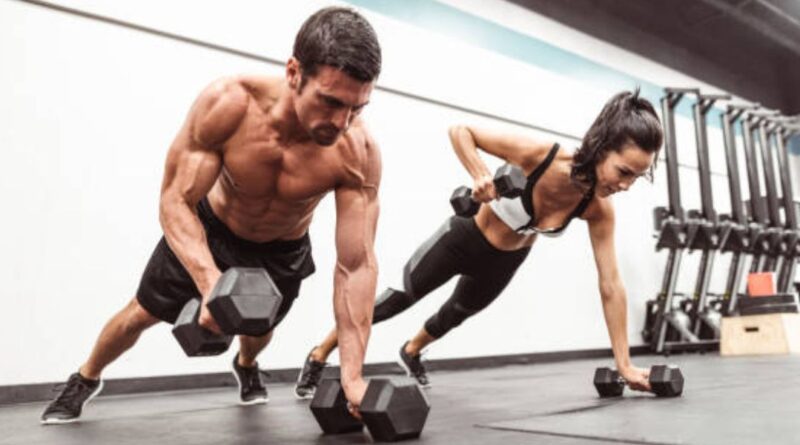
Top 10 Surprising Partner Workout Moves That Could Change Your Fitness Journey
Let’s be honest—when you first heard about partner workouts, you probably rolled your eyes. Maybe you pictured awkward gym couples coordinating together lounges or those cringe-worthy fitness Instagram posts. But here’s the thing: while you were dismissing it as a craze, something genuinely interesting has been happening in the fitness world.
What You’re Actually Seeing (And Why It’s Different This Time)
You’ve likely noticed more fitness influencers posting partner content or your local gym offering “couples classes.” This isn’t just another TikTok or any other social media trend destined to disappear—there’s real substance behind the movement. The current partner workout trend represents a shift from the traditionally solitary nature of fitness. You’re seeing moves that require two people to execute, creating affiliations that go beyond just having a workout buddy. In fact, some of the best gyms in NYC are now introducing specialized partner programs to make workouts more engaging and community-driven.
The Surprising Moves That Are Changing the Game
1.Partner Medicine Ball Slams (With a Twist)
You know those explosive medicine ball slams? Now imagine doing them while your partner mirrors your movement on the opposite side. It’s not just about power—you’re forced to maintain rhythm and timing, which engages your core in ways you didn’t expect.
2. Human Plank Walks
Picture this: you’re in a plank position while your partner carefully steps over you, side to side. Then you switch. It sounds ridiculous (and frankly looks a bit silly), but the stability challenge is real. Your core works overtime to maintain position while accommodating your partner’s movement.
3.Resistance Band Battles
You’ve probably used resistance bands solo, but the partner version turns it into a strategic game. You’re pulling against each other’s resistance, creating unpredictable tension that forces constant micro-adjustments.
4. Partner Deadlift Variations
You’ve probably used resistance bands solo, but the partner version turns it into a strategic game. You’re pulling against each other’s resistance, creating unpredictable tension that forces constant micro-adjustments.
Why This Trend Has Legs (Unlike Some Others)
The Psychology Actually Makes Sense
While I’m not a sports psychologist, the research on accountability partners in fitness is solid. A 2016 study from the University of Pennsylvania found that people exercised 90% more when they had social support. When you add the physical requirement of cooperation, accountability becomes literally built into the exercise.
The Instagram Factor (But Not in a Bad Way)
Yes, partner workouts are naturally more ‘shareable’ than your standard solo routine. But unlike many social media fitness trends, these exercises demand real skill and progression. You can’t fake your way through a partner deadlift or cheat on synchronized movements.”
Real Trainers Are Taking Notice
Personal trainer Mike Matthews, who’s generally skeptical of fitness fads, recently noted on his podcast that partner exercises “force you to slow down and focus on form in ways that solo training sometimes doesn’t.” When the evidence-based fitness crowd starts paying attention, you know something’s worth considering.
The Limitations You Should Know About
Let’s be real—you might try all of these movements yourself, but long-term research on partner-specific exercises is still limited. Most of the benefits described here are based on broader research around social support and fun Let’s be real—you’ve probably tried all of these movements, but long-term research on partner-specific exercises is still limited. Most of the benefits described here are drawn from broader research on social support and from real life people’s reviews.”
There’s also the obvious practical issue: you need a committed partner. If your workout buddy flakes, you’re stuck. And let’s not pretend that exercising with someone else doesn’t come with potential relationship dynamics that could make things weird.
What You’re Really Getting Into
The Good Stuff
Built-in form checking: Your partner becomes a live feedback system
Natural progression: Moves often scale with both partners’ abilities
Accountability that you can’t ignore: Unlike texting your gym buddy, your partner is literally there
Problem-solving element: Figuring out how to execute moves together engages your brain differently
The Reality Check
Coordination curve: Some moves take practice to execute safely.
Equipment considerations: Many exercises require specific gear or space
Personality matching: Not everyone works well with a training partner
The Bigger Picture You Might Be Missing
What’s cool about this trend is that it’s part of a bigger move toward more natural, real-life movement in workouts. Instead of just training one muscle at a time, people are doing exercises that copy how we move in daily life. Partner workouts fit right in—because in the real world, you often have to work with others to get things done.
The rise of obstacle course races, functional fitness competitions, and team-based fitness challenges suggests people are craving more engaging, collaborative approaches to exercise. Partner workouts tap into this desire for fitness that feels less like work and more like play.
Where This All Might Be Heading
It’s hard to predict whether partner workouts will become a lasting part of fitness culture or fade like so many trends before them. However, the underlying principles—accountability, coordination, and functional movement—align with broader shifts in how people think about exercise.
You might see more gyms offering partner-specific programming or fitness apps that help you find compatible workout partners. There’s already interesting development in virtual partner workouts for long-distance relationships or remote fitness coaching.
Last Words
Whether partner workouts are worth your time depends on your personality, goals, and social situation. If you thrive on routine and prefer to zone out during exercise, this trend might not be for you. But if you’re looking to break out of a fitness plateau or want to make exercise more engaging, the partner approach offers legitimate benefits beyond the novelty factor.
The surprising thing isn’t that partner workouts exist—it’s that they’ve managed to create genuinely functional exercises that are more fun than traditional alternatives. In a fitness world often obsessed with optimization and metrics, maybe the real revolution is remembering that exercise can be collaborative and enjoyable.
What remains to be seen is whether this trend will develop into a serious training methodology or remain in the realm of recreational fitness. Either way, it beats another solo session on the elliptical.
Quick FAQ
Q: What if my partner and I have different fitness levels?
Most partner exercises naturally scale to the weaker person’s ability, which actually makes them more inclusive than you’d think. The stronger partner often gets an extra stability or endurance challenge while helping their partner succeed.
Q: Do I need special equipment for partner workouts?
A: Not really. Many effective partner exercises use body weight, resistance bands, or a single medicine ball. You probably have everything you need already—or can improvise with household items.
Q: Can partner workouts replace my regular gym routine?
They’re better as a supplement or occasional substitute rather than a complete replacement. You’ll still want access to progressive resistance and cardio equipment for well-rounded fitness. Think of partner workouts as the fun course, not the main meal.
Q: What if we look ridiculous doing these exercises?
A: You will. Embrace it. Half the benefit comes from not taking yourself too seriously and focusing on movement quality over looking cool. Besides, everyone’s too busy with their own workouts to judge yours anyway.